|
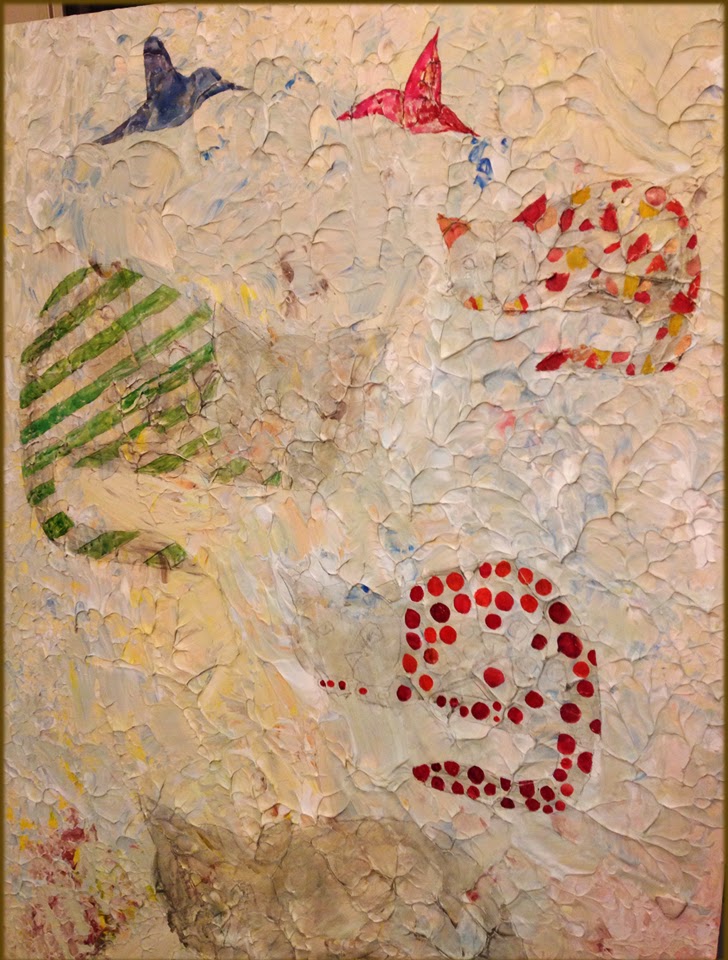
Cousin Charlie Rooster #2
is a greeting card on
consignment at
|
Once you have decided to share your art beyond giving it as gifts to friends and family, you will look for venues to sell your work. Art sales options can be overwhelming: ETSY (your work), zazzle (your designs on their products), your own blog, any of the dozens of web-based group sales venues, art fairs, sales through the arts organizations that you have joined, and farmers' markets.
Considering consignment
Eventually you may consider consignment, a nifty arrangement in which you put your work into either a brick-and-mortar or web-based store in which someone else handles the customer interactions (conversations and sales), and you keep ownership of the work until it sells. The benefits are wider exposure than you might create on your own and the expansion of your sales team to include the store owners and staff. For this, you pay a percentage of the sales price.
Consignment is a big step. Think through these points as you consider consignment:
1. Find the right venue #1.
Talk to
the owners or managers. They are in business to make money for themselves and
for their artists. Make sure that you are comfortable with the people you will
trust with your art.
 |
Pandas from the
Hidden Bamboo Forest of Saint Paul
are on consignment on a greeting card at
|
2. Find the right venue #2.
If a store has a mission (representing
artists from under-served communities, artists with disabilities, artists from a
specific geographic area), don’t press to be accepted if you are not a member
of the group.
3. Find the right venue #3.
Pay
attention to stores’ price points. Don’t embarrass yourself by approaching a
high-end-big-dollar gallery if the work that you want to sell is exactly what
you sell on ETSY for under $30.
4. Find the right venue #4.
Style
matters. A gallery with a 20-year history of selling cutting-edge abstracts run
by one of the Big Names in Abstract Art Criticism may not be interested in
taking on even the most exquisite realistic botanical art.
5. Find the right venue #5.
Some
stores require artists’ participation beyond dropping off work. Is there an
hours-per-month requirement? If you are uncomfortable with a few hours a month
at retail, are there other ways to fulfill a work requirement? Ask about the
managers’ needs. Consider social media, marketing and merchandizing as ways to fulfill your
obligation.
6. Follow the store’s protocols with
your Inventory Integrity.
You want to
sell your art, and all stores have rules about pricing and presentation which -- if you want to get paid correctly -- you must follow to the letter. Although
you will not be in the store every day, you must monitor your own inventory.
Once accepted, you will submit inventory sheets with coding, prices, and product descriptions. Smart artists use
consistent inventory coding and pricing across all inventory and across all
platforms. Present legible inventory lists. Unless it is the policy, don’t
expect the store managers to code and price your work.
7. Understand when and how you will
be paid.
Some stores have multiple levels for consignors. Make sure that you
understand exactly how each store's compensation system works. Most stores collect
and pay sales tax. You are responsible for paying your own income tax. Talk to
an accountant or tax lawyer to make sure that you are tracking your sales and
paying your income taxes correctly.
8. Setting prices #1. Pricing is
hard.
What is the magic number that will encourage someone to purchase your
work without undercutting its value (and your profit)? How much is too much?
How little is too little? Talk to the managers. Look at the stock and ask about
price points and what sells best. Talk to your artist friends who sell on consignment, and ask for their advice.
9. Setting prices #2.
Price your
items consistently. If not now, then soon, you will be selling art in many
outlets and across many platforms. Nothing will irritate store managers
and customers more than inconsistent pricing should you have one price for your
website, another price for ETSY, one price for this store, another for the shop
across town, and yet another for your direct sales. This is part of your
Inventory Integrity, and only you can manage it.
10. Packaging: People buy with their eyes
Always present clean,
well-packaged work. Make sure that price tags and other tags are legible.
11. Ask to do a demo or to teach a
class.
Many consignment venues have space for teaching which generates traffic
for the store and can generate income for you. Note that store owners and managers are
your first, best audience. The more that they know you, how you make your art,
and how you talk about it, the easier it is for them to talk about your work to
customers when you are not in the store.
12. Your artist statement.
Within the space limitations of
the store, post an artist statement. Customers are curious about you and your
art. How do you make it? What is/are your inspiration(s)? What materials do you
use?
13. Sales are not personal.
Some of your work may fly off the shelves;
other work may not sell at all. Consider re-packaging, re-framing, or
re-purposing the work by cutting it up and making a mosaic out of it, spreading
gesso over the canvas and making a new painting, or re-making the jewelry by
using the components in new work. Every piece of work won’t be loved, but all
of it can be re-purposed.
14. Know the law.
You will be asked to
sign a contract. Read it. If you don’t understand some of its terms, ask the
store owner, or, better yet, take it to your lawyer. You have a lawyer don’t
you? Every artist should have a
lawyer on retainer for no other reason than to
have an expert eye to review anything to do with the sale of your art. Find a lawyer who represents creatives as small business owners.
More reading about consigning
Consignment selling regulations
How to understand consignment rules
Starting a consignment business